5 Ways Twitter Destroyed My Low Voltage Power Cable Without Me Noticin…

 Ashton
본문
Honestly, it is determined by the order amount and the season you place the order.The perfect record we keep is delivering 10 kilometers cable inside a week. We don’t know whether or not which means that Samsung’s mental property is within the M1, or whether Apple merely cloned the interface to maintain it software program-compatible (UARTs aren’t precisely onerous to design), but either manner which means today’s Exynos chips and Apple Silicon nonetheless have one thing in frequent. To make backwards branches & tight loops (e.g. synthesizing output samples/pixels, common compsci algorithms) quick the place it most matters I’d add one other stage immediately before learn/execute/write to cache decoded microcode. The final proposal is to add mosfets between charger I2C pins and the POGO I2C pins, with gate linked to INT pin. I2C interface is shared with the keyboard's MCU, so if charger wakes up when the MCU is speaking with the SoC, it may see low voltage on I2C pins, and misdetect the interface as LED one, and begin driving it as such and break communication between MCU and SoC. Technically speaking, voltage on the USB port of the telephone must not at any time drop beneath 4.3V (and it is higher for stability if it doesn't drop below 4.5V). This is easier mentioned than executed.
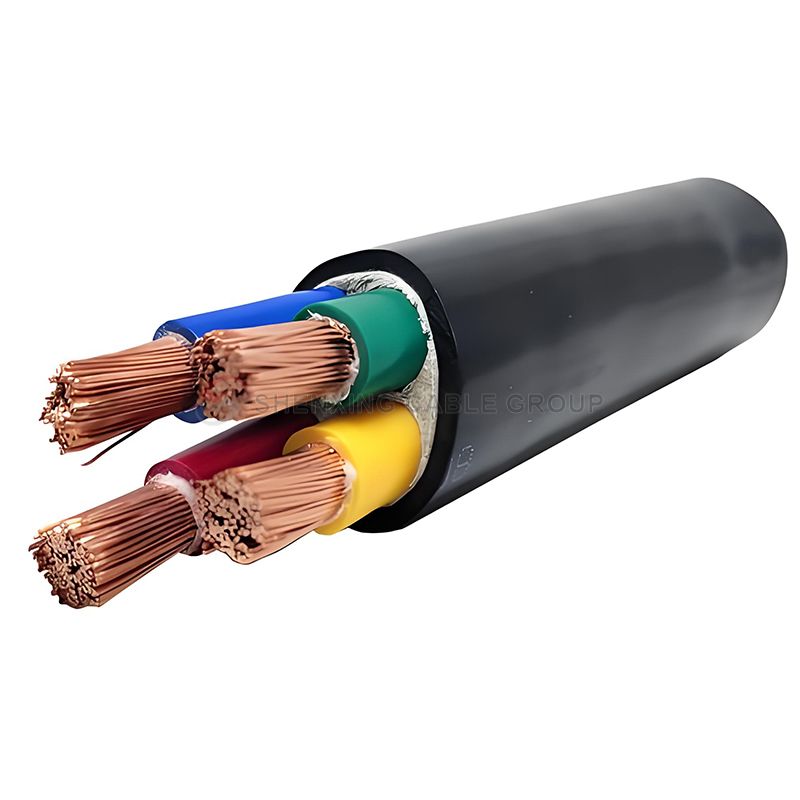 These attributes ensure superior security, reliability, and performance, making Polycab the preferred choice for all your low voltage power cable needs. Fast service and brief lead occasions make Qifan Cable a trusted selection to your cable wants. So you may have a selection between kernel and userspace drivers for the keyboard. Power consumer based hardware or firmware modding the keyboard is kind of a seemingly chance when everyhting is developed in the open utilizing FOSS licensing, with give attention to making this relaitvely simple. GPIO on the keyboard's micorcontroller to perform HW modifications (there's some free space contained in the keyboard), and hook up some extra peripherals to the MCU and expose them over I2C to the telephone. Once that is finished, it is going to be necessary to again have a look at making the MCU operation as low power as possible, through the use of the facility down and inexperienced modes of the MCU. It will likely be potential to configure the keyboard's scanning behavior in numerous methods over the I2C, and carry out self-assessments for QA purposes.
It's possible to run Pinephone Pro from just a USB power supply. Feeding a (odd variety of) NOT gates’ output again into their input provides the fastest possible electronic oscillator, although with a extremely unreliable & probably too quick frequency! But to get into tons of of megahertz we need to push the frequency even increased! Even U-Boot can do issues that will cause the cellphone to cross the limit, if not careful. In actual fact, Pinephone Pro is sort of effectively suited to working and not using a battery, as a result of not like on the unique Pinephone, WiFi and modem will still each work, when the phone is powered solely from the USB port. That is simply a typical USB PCIe xHCI controller that's already well supported by the standard driver in Linux, however there’s an Apple twist to the story: the controller wants firmware uploaded by the driver on Apple Silicon platforms! Also, don't trust the proprietary "driver for Linux" from Gaomon/XpPen/Huion: they are often low quality and blackboxes you can't report bug or tweak once they stop working (proprietary), but sometime they work nicely depending the OS/D.E.
As part of this change, we also realized that documentation on all of the totally different ioremap() modes in Linux was sorely lacking, as was complete documentation on the I/O learn and write capabilities (which are associated, and of which there are a lot of delicate variants). The overlay floor can be simple to alter, and cheap. Specification: Medium sized A5, extremely smooth Plexiglas overlay sheet, 4/3 ratio. The vogue of "wide" ratio display screen began. Context: First Cintiq, was a dream to try to "draw on display". Used with: Built-in display , and other 1080p screens apart. Used with: Second monitor , 1680x1024 16/10 monitor. Used with: 1280x1024 4/3 monitor, and discovering first Linux distro in 2007 with it. Pro: Super sturdy, tremendous normal on each Linux (plug'n'play). Pro: Good precision, got a slot on the top of the pill to clip the stylus when traveling. Battery life is sweet and in addition all works when using the direct USB cable for charging so no panic in case of emergency work to do and running out of battery.
댓글목록0
댓글 포인트 안내